The Language of the Senses
Before children can explain what a space means to them, their bodies are already listening, questioning, exploring, and answering through the senses.
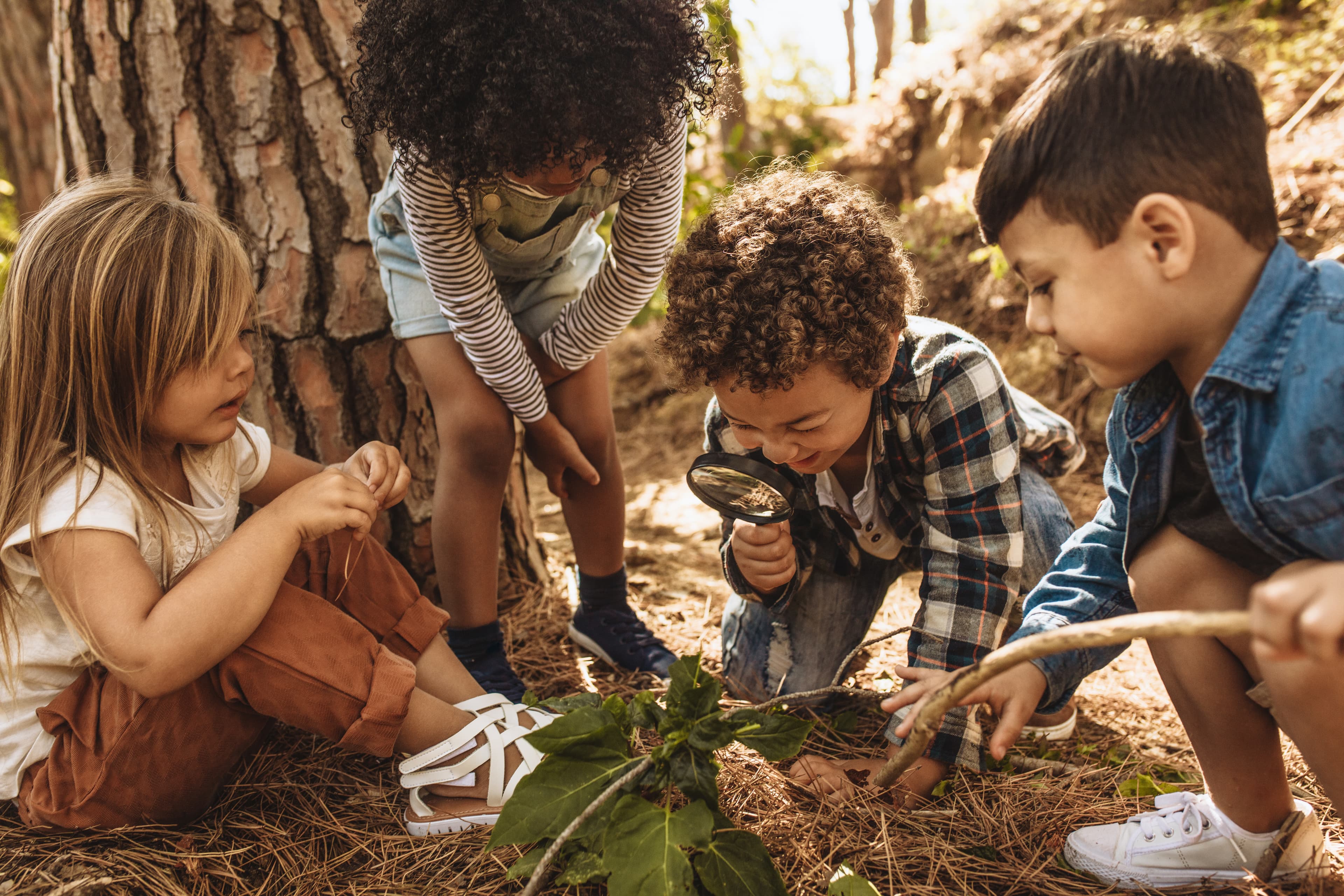
Our senses are the filters through which we understand the world.
Children are constantly gathering information about the places around them. Before they have the language to explain exactly what they are feeling or noticing, their sensory systems are already helping them interpret the environment.
Jena describes this as a kind of unspoken conversation between a child and the space they enter — whether that space is a playground, an outdoor classroom, a streetscape, or even their own bedroom.
Every environment is already saying something to a child.
What Can This Place Offer Me?
When children enter a new environment, they begin asking questions without necessarily saying them out loud.
What can I do here? What can I experience? Is there somewhere to move? Somewhere to hide? Something to touch? Something to investigate? Does this place feel safe? Interesting? Boring? Overwhelming? Inviting?
Those questions shape the way a child begins interacting with the environment.
The Environment Always Answers
Spaces communicate back through sensory information.
Color, shape, texture, fragrance, movement, sound, taste, temperature, light, and physical challenge all tell children something about what is possible in a place.
A smooth open lawn communicates something different from a dense garden. A climbing tree offers a different invitation than a plastic bench. Running water, tall grasses, loose branches, bright flowers, mud, rocks, and shaded nooks each create different kinds of sensory conversations.
The richer the environment becomes, the more ways children have to respond to it.
Play Deepens the Conversation
At first, a child may simply notice a space. Then they begin to interact with it.
They touch something. Move something. Climb. Smell. Listen. Gather. Build. Watch. Dig. Taste. Balance. Hide.
Through play, that initial sensory exchange becomes deeper. The child begins learning what the environment can do and what they themselves can do within it.
This Happens Before Language
One of the most important parts of this idea is that the conversation does not depend on spoken language.
Infants experience it. Non-verbal children experience it. Children who communicate differently still build relationships with their surroundings through movement, sensation, curiosity, comfort, challenge, and repetition.
Nature Is Especially Good at Speaking This Language
Natural environments are full of variation.
They change with weather, seasons, growth, decay, animals, sunlight, water, and the movement of people through them. That variability gives children an enormous amount of sensory information to respond to.
Nature is rarely just one thing. A garden can be visually rich, tactile, fragrant, edible, noisy, quiet, challenging, calming, and unpredictable all at once.
Nature does not need children to understand it intellectually before they can begin building a relationship with it.
Children Need Time to Listen
Jena emphasizes that children need both time and space for these relationships to develop.
If every moment is directed, hurried, or filled with adult instruction, there is less room for a child to notice what an environment is offering and decide how they want to respond.
Unstructured nature play gives children the chance to slow down, follow their own attention, and develop familiarity with a place. Over time, that familiarity can become a lasting relationship with nature.
That Relationship Can Become an Anchor
A meaningful connection with nature is not just about having fun outside.
Jena describes that relationship as something children can carry with them throughout their lives — a source of familiarity, connection, comfort, and grounding when life becomes difficult or turbulent.
Design the Conversation, Not Just the Space
Thinking about sensory design changes the question from “What equipment should go here?” to “What experiences can this place offer?”
Can children move in different ways? Can they find quiet? Can they touch living things? Can they investigate small details? Can they manipulate materials? Can they smell, listen, balance, build, and imagine?
The goal is not to control how children use the environment. It is to give the environment enough richness that children have something meaningful to respond to.
Nature Play for the 7 Senses
Learn more about how sensory-rich nature play can support children’s development, regulation, learning, and connection with the natural world.
Explore the Guide >