Nature Play and Our Vestibular System
Hop, swing, spin, skip, roll, rock, run, walk, crawl — movement gives children essential information about balance, gravity, and where their bodies are in space.
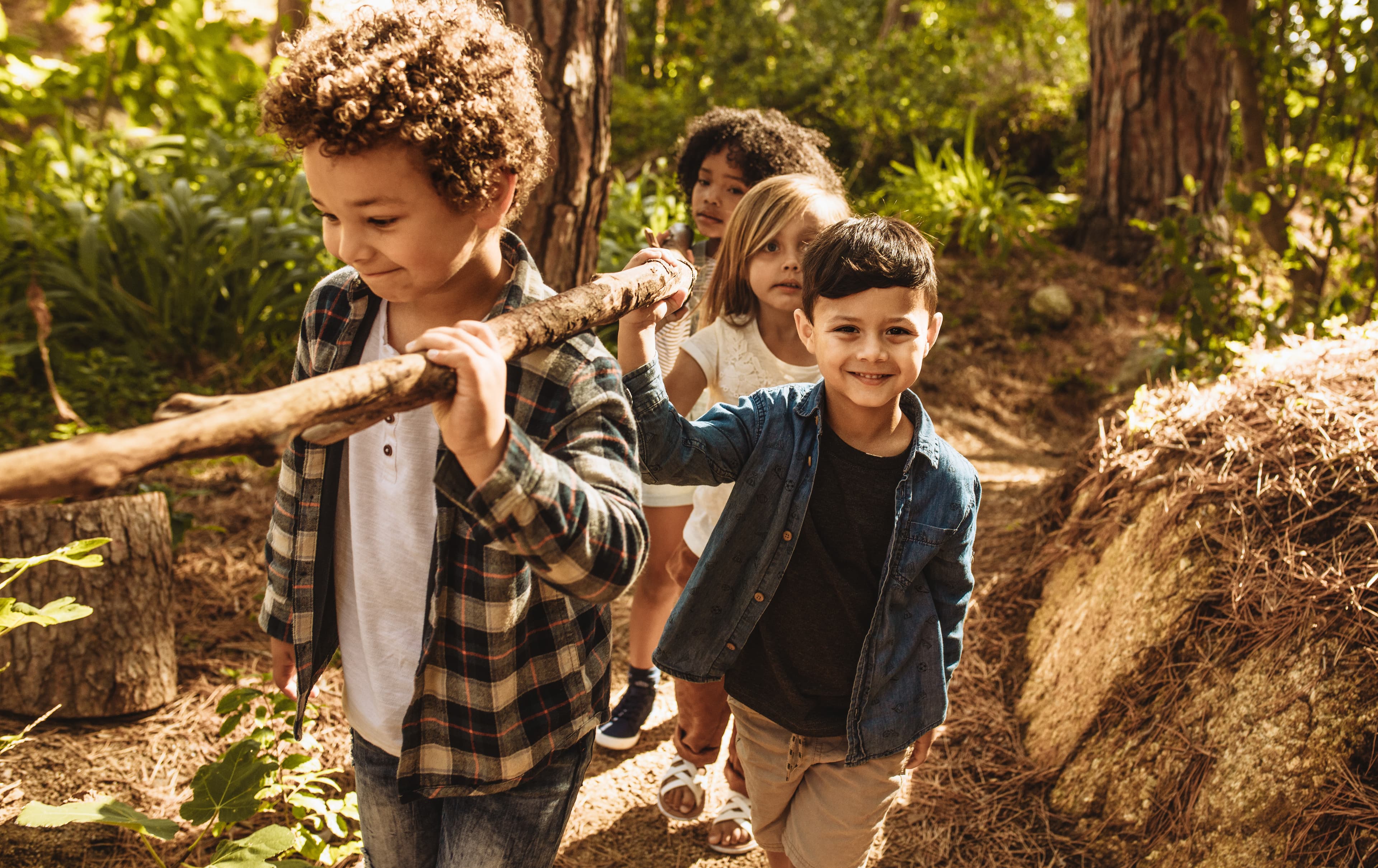
The vestibular system is our sense of movement and balance.
The vestibular system is one of the body’s movement-based sensory systems. It is located in the inner ear and helps the brain understand where the head is in relation to gravity.
It tells us whether we are upright, upside down, tilted, spinning, or moving through space. When that system is not working comfortably, we can feel dizzy, disoriented, or off-balance.
The more children move in different ways, the more opportunities they have to build and understand their vestibular system.
Dancing
Dancing is an easy way to give children vestibular input while also engaging multiple sensory systems at once.
Turning, swaying, jumping, bending, spinning, and changing direction all challenge the body to continually process movement and balance. And conveniently, it also works extremely well as an impromptu kitchen dance party.
Swinging
Swinging gives children repeated movement through space and can be adjusted to match different sensory needs.
Nest swings are especially flexible because children can sit, recline, gently sway, or experience more active movement depending on what feels comfortable to them.
Balancing
Balance activities do not need specialized equipment. A garden hose arranged in a winding line on the lawn can become an instant balance path.
Children can walk the line, try different body positions, move forward or backward, or turn it into a game as they become more confident.
Jumping
Logs, stepping rounds, rocks, and other natural features create opportunities for children to jump between different heights and distances.
That kind of movement combines vestibular input with coordination, balance, proprioception, planning, and confidence.
Movement-rich play does not need to look the same for every child.
Let Movement-Sensitive Kids Stay in Control
Some children actively seek spinning, swinging, and big movement. Others are much more sensitive to it.
For movement-sensitive children, Jena emphasizes letting the child control the amount and intensity of vestibular input. That might mean gently swaying instead of swinging high, rocking slowly, or watching before choosing to participate.
When children control their sensory experience, they can feel safer and more confident in their bodies.
Sensory Paths Encourage Different Kinds of Movement
A sensory path can invite children to hop, balance, step, crawl, turn, or move their bodies in unusual ways.
The goal is not simply exercise. Changing movement patterns gives the vestibular system more varied information to process.
Trees Naturally Invite Movement
Trees may be one of the best natural vestibular play features available. Climbing involves balance, changing head position, reaching, dangling, shifting weight, and sometimes a carefully calculated jump back down.
Jena describes both the maple she climbed as a child and the old cherry tree her own children use for hanging, swinging, climbing, and eventually playing inside a small fort built into the canopy.
Plants Can Create Movement Too
Dense plantings can encourage children to weave, turn, duck, and move through a space differently.
Jena suggests ornamental grasses such as Karl Foerster Feather Reed Grass for creating maze-like paths. The grasses add movement opportunities while also producing swishing sounds as children pass through them.
Logs Make Excellent Natural Movement Features
Log segments can become balance beams, climbing features, rocking elements, or stepping stones.
A large log round cut in half can become a rocker, while thinner “log cookies” can be arranged as stepping stones for hopping and balance play.
Nature play does not have to rely on expensive playground equipment. Often the richest movement opportunities come from simple natural materials children can interact with in many different ways.
Nature Play for the 7 Senses
Explore more ways to create sensory-rich natural play and learning spaces for children through Jena’s guide to the seven sensory systems.
Explore the Guide >