Nature Play and the Sense of Sight
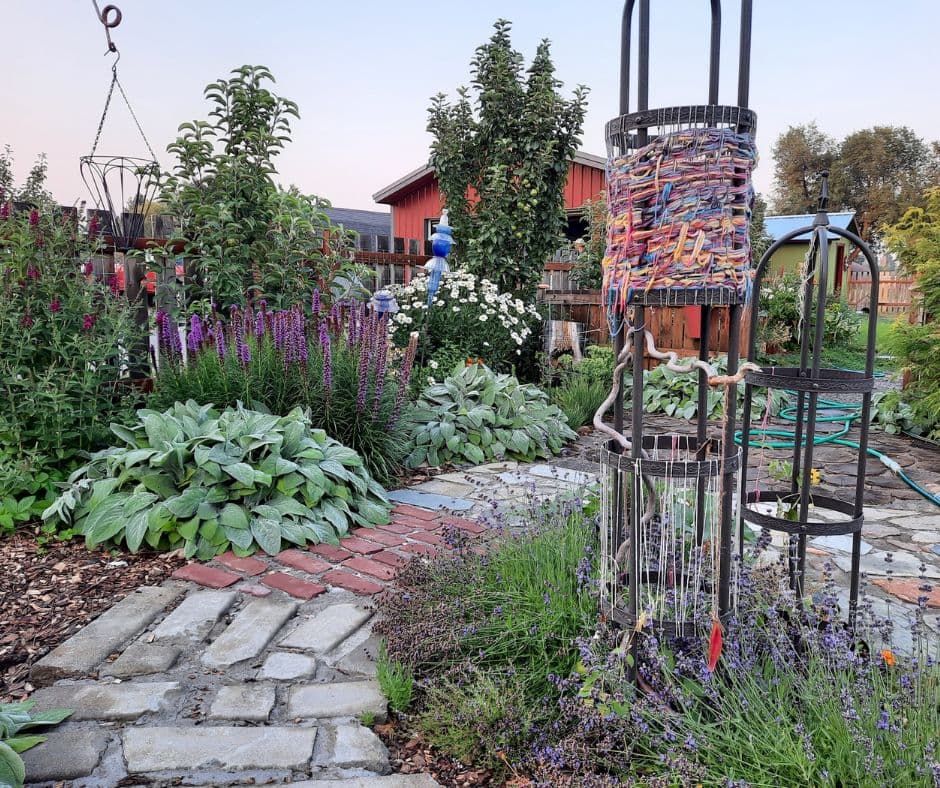
Color, movement, pattern, texture, shape, light, plants, bugs, water, art, and changing seasons give children endless things to notice and explore.
Sight helps children interpret the world around them.
Through vision, children learn to recognize shapes, colors, distance, depth, movement, and the visual characteristics of the places around them.
Visual experiences also support language and social development. Children build vocabulary by naming and describing what they see while connecting with other people and with the natural world.
Nature is basically an endless visual scavenger hunt.
Nature Already Offers Incredible Visual Variety
Butterfly wings, dandelion seed heads, spider webs covered in morning dew, water reflecting light, spores beneath fern leaves, bright autumn leaves, pinecones, bark, flowers, grasses, sand, stones, and trees all create different visual experiences.
The more nature a play space contains, the more opportunities children have to observe differences in color, texture, pattern, form, movement, and scale.
Add Visual Features That Invite Interaction
Natural materials can be complemented by carefully chosen human-made visual features.
Jena suggests sculptural garden arbors with climbing plants, kinetic features like wind spinners, outdoor art and sculpture, colorful plantings, murals, magnifying glasses, magnifying stations, kaleidoscopes, and telescopes.
These additions can capture attention, spark imagination, and give children new ways to notice and investigate their surroundings.
Visual interest does not have to mean visual clutter. The goal is to give children something worth noticing.
Color Can Change the Feeling of a Space
Plants can be used strategically to create different visual moods.
Warm colors like red, orange, and yellow tend to feel more active and visually forward, while greens, blues, and purples often feel calmer and more visually receding.
Grouping plants together in larger masses can create stronger visual impact than scattering small amounts throughout a space.
Shape and Form Matter Too
Plants with unusual forms can become landmarks or focal points in a play environment.
Columnar shapes, weeping forms, twisted branches, textured bark, and dramatic flower structures can all help children notice differences in how living things grow and change.
Sensory Plants for Sight
Jena highlights several plants that add especially strong visual interest to children’s spaces.
Paperbark Maple
Paperbark maple is known for its curling, cinnamon-colored bark. The peeling layers create visual texture throughout the year and can make the tree an interesting focal point in a sensory garden.
Harry Lauder’s Walking Stick
This small tree or shrub has twisted, contorted branches that look almost sculptural.
Its unusual shape makes it especially interesting during seasons when leaves are absent and the branch structure becomes more visible.
Magical Gold Forsythia
Forsythia brings intense yellow blooms in early spring, creating a bright burst of color after winter.
Its early flowers can become a strong seasonal marker for children, helping them notice changes in the garden over time.
Dark Horse Weigela
Dark purple-bronze foliage makes this plant visually dramatic even before it flowers.
Jena notes that the foliage becomes especially striking when paired with chartreuse or blue-toned plants, creating strong visual contrast.
Fanfare Blanketflower
Bright yellow, orange, and red blooms give this plant an energetic appearance, while its unusual petal shape rewards close inspection.
Placing plants like this near paths, fairy gardens, or sitting areas gives children a reason to stop and look closely.
Gladiator Allium
Gladiator allium sends up tall stems topped with large, globe-like purple flowers.
Jena suggests planting several together for a stronger visual statement and a more dramatic sense of scale.
Purple Passionflower
Passionflower has exceptionally intricate blooms that almost beg to be inspected up close.
Because it is a climbing vine, it can also become part of arbors, tunnels, and cozy spaces where children can sit quietly and observe the flowers.
Sunflowers
Sunflowers bring height, bold color, strong shapes, and seasonal change into a play space.
Jena especially likes using them to create sunflower houses by planting seeds in a circle and allowing the plants to form a living hut as they grow.
Let Children Help Choose What Comes Next
Creating visual interest does not need to become a giant design project all at once.
Jena suggests choosing one feature children would enjoy — or letting them choose it themselves — and turning the addition into a family project.
A wind spinner, a bright flower, a sunflower house, a magnifying station, or a piece of garden art can be enough to make an outdoor space feel newly interesting.
As always, plants used in children’s play areas should be non-toxic, and pesticides, herbicides, and other harmful chemicals should be avoided in spaces where children play.
Nature Play for the 7 Senses
Explore more ways to create sensory-rich natural play and learning spaces for children through Jena’s guide to the seven sensory systems.
Explore the Guide >