Ladybug Bridges and Other Magic
Sometimes the best thing happening in the garden is the thing nobody planned for.
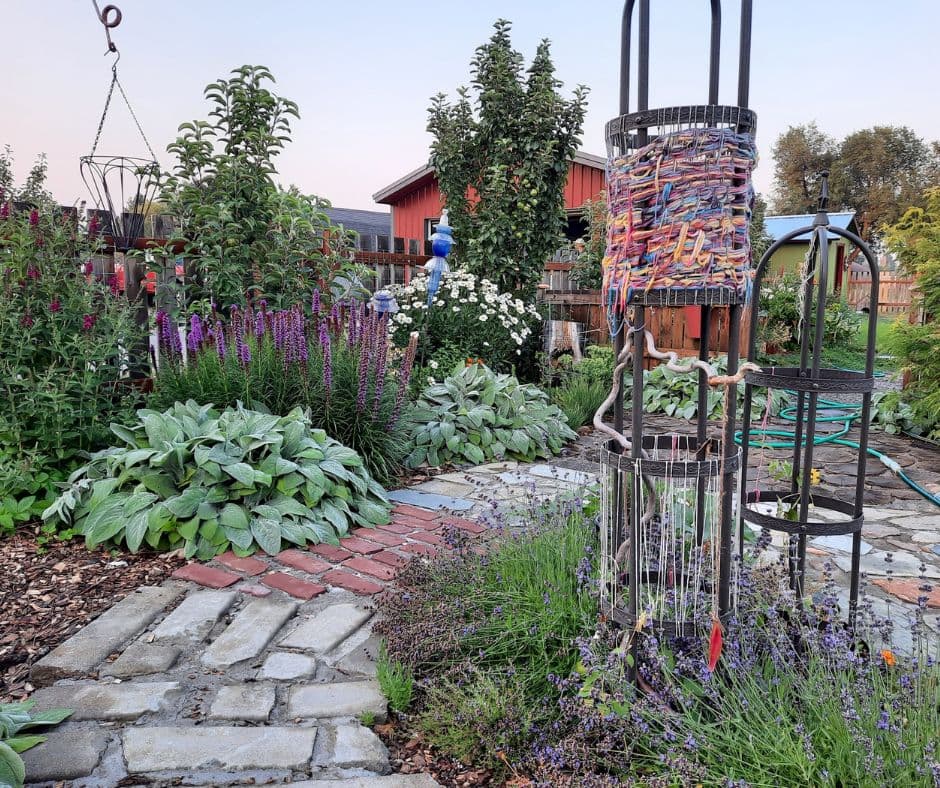
Pay close enough attention and even one plant becomes a whole world.
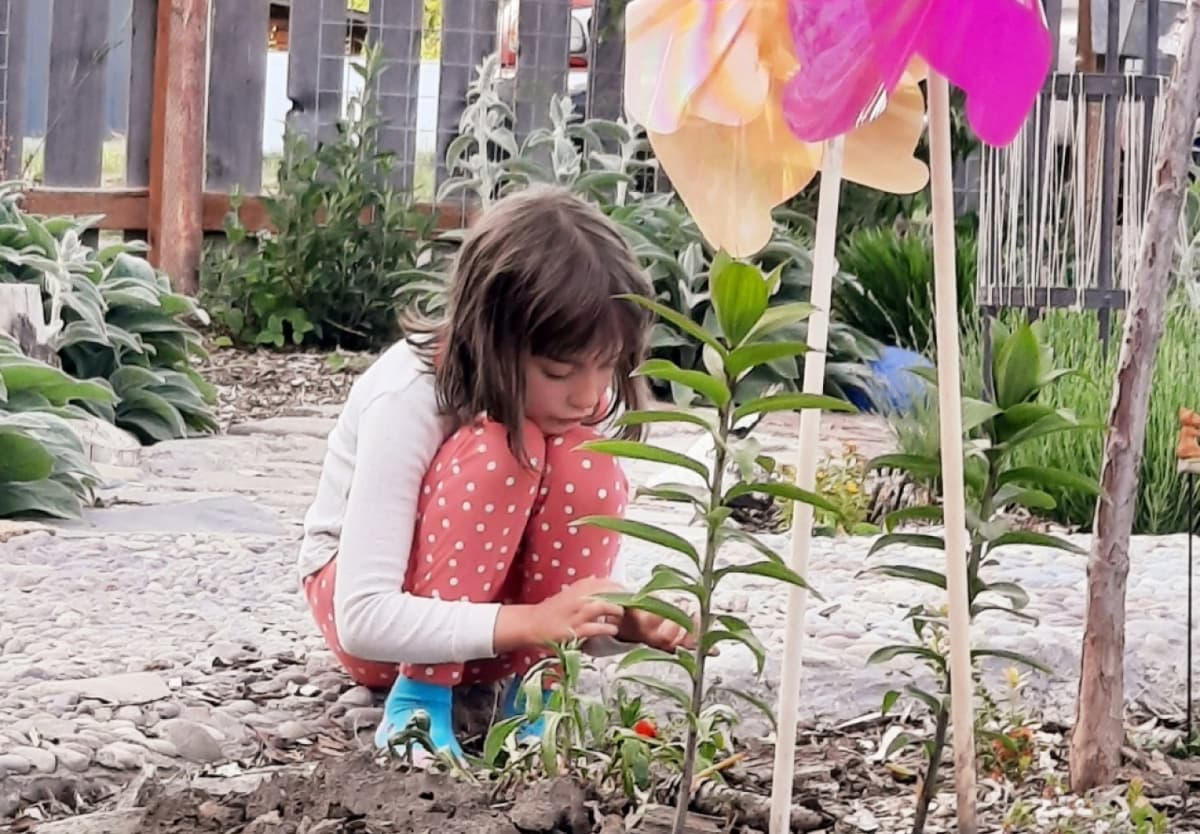
One early summer day, Jena and her daughters were outside in the sensory garden picking raspberries for freezer jam.
One of her daughters noticed that there seemed to be more ladybugs than usual gathered around the nearby Autumn Joy sedum. Raspberry picking immediately became less interesting.
The whole group moved in for a closer look.
Sometimes distraction is just curiosity pointing somewhere better.
A Tiny Ecosystem Hiding in Plain Sight
Once they slowed down and really looked, the plant was full of activity.
There were different kinds of flies resting on unopened flower buds. A spider had tucked an egg nest beneath the curved underside of a leaf. And then they found something even stranger.
Thin, dried slug trails stretched up the stems, across leaves, and over the broad flower heads of the sedum. In the light, the delicate trails had an iridescent rainbow sheen.
“Magical Rainbow Tape”
One of the girls decided the shimmering trails looked like magical rainbow tape.
The dried slime was paper-thin and fragile. When they gently touched it, it broke apart.
Slugs may not normally rank particularly high on a gardener's list of beloved visitors, but that morning they had accidentally left behind the raw material for a seven-year-old's imagination.
The slugs had built bridges for the ladybugs.
Obviously, the Ladybugs Needed Bridges
The girls' favorite explanation was wonderfully practical.
Ladybugs have tiny legs. Traveling from one sedum stem to another would mean climbing all the way down one plant, crossing the ground, and climbing all the way back up the next.
Exhausting.
So perhaps the slugs — apparently generous little civil engineers — had stretched shimmering bridges between the stems to make the ladybugs' journeys easier.
This Is What Nature Play Can Look Like
There was no lesson plan hiding in the garden that morning.
Nobody set out to study insects, inspect spider nests, investigate slug trails, or invent transportation infrastructure for ladybugs.
The children noticed something interesting, adults followed their attention, and an ordinary plant became a place filled with observation, storytelling, science, sensory experience, and imagination.
That kind of experience is difficult to manufacture because its value comes partly from discovery.
There is magic all around us. Children are often simply better at noticing where it is hiding.
One Sedum, Many Worlds
In one unassuming plant, the girls found ladybugs, flies, a spider, eggs, slugs, shimmering trails, and an entire imagined world connecting them.
Jena describes moments like this as the beating heart of a child's relationship with nature: the point where curiosity meets living things and something ordinary suddenly becomes enormous.
Sensory Plant Feature: Autumn Joy Sedum
The plant at the center of the adventure was Autumn Joy sedum, also known as Sedum spectabile 'Autumn Joy.'
Jena describes it as a four-season perennial that grows to roughly two feet tall and slightly wider, with a hardiness range of about zones 4 through 11.
Its broad flower heads and changing seasonal structure make it visually interesting, while the insects and other small creatures it attracts can add an entirely different layer of discovery for children.
Leave Room for the Unplanned Stuff
A sensory-rich nature play space does not need every interaction designed in advance.
Sometimes the job of the environment is simply to contain enough life, variation, texture, movement, and change that children have something worth noticing.
Then the adults can occasionally put down the raspberry basket and follow them.
Nature Play for the 7 Senses
Explore Jena's guide to creating sensory-rich natural play and learning spaces where children have more opportunities to notice, imagine, move, explore, and connect.
Explore the Guide >